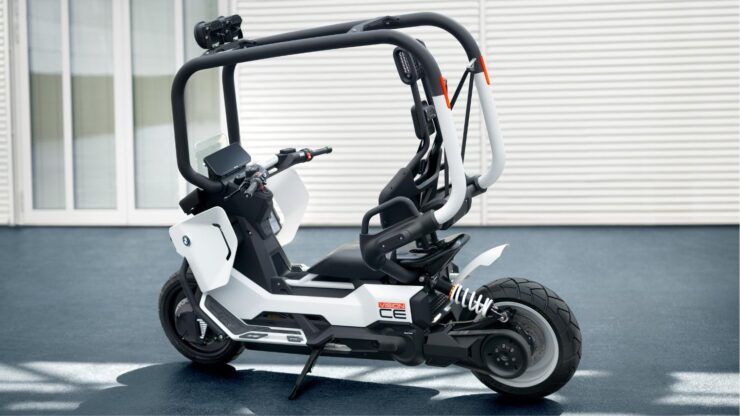
BMW Motorrad has filed a design patent in India for the Vision CE, an unconventional electric scooter concept first showcased at EICMA 2025. Rather than following the familiar scooter formula, the Vision CE explores a different approach to urban mobility, combining self-balancing technology with a protective structure around the rider.
The patent filing brings the concept into focus for the Indian market, but it should not be mistaken for a launch announcement. BMW has not confirmed whether the Vision CE will enter production or go on sale in India. The Vision CE’s most distinctive feature is its protective cage-like structure, which surrounds the rider with a padded tubular frame.
The design aims to offer additional protection from the front, sides and above, setting it apart from conventional two-wheelers. BMW’s concept also explores reducing the need for conventional riding gear through this protective structure. However, that is a design objective, not a reason to ride without a helmet or other legally required safety equipment. Any production version would need to meet applicable regulations.
Also Read: Bajaj Pulsar N250SS Launched At Rs. 1.59 Lakh; TFT, 6-Speed Gearbox & More
The Vision CE is designed to balance itself on two wheels, even when stationary. This means the rider would not need to put a foot down every time the scooter comes to a stop. It also gives the concept the ability to stand upright without relying on a stand while the balancing system is active. The idea could be useful in stop-and-go city traffic, particularly for riders who find balancing a conventional two-wheeler at low speeds challenging. BMW has not, however, announced detailed technical specifications for the system or explained how it would work in a production-ready version.
The Vision CE has a long wheelbase, a low roofline and large disc-style wheels, giving it a stretched profile that looks unlike a conventional electric scooter. Its open cage structure is finished in a minimalist combination of white and black, with red accents adding contrast. The concept is designed for a single rider and features a dedicated seat with a seatbelt. BMW has also shown a mid-mounted electric motor and belt drive arrangement. Battery capacity, power output, charging time and riding range have not been confirmed for a production model.
Also Read: New Norton 450 CC Bike To Launch In India Next Year, Debut Soon; Report
There is no confirmed launch timeline yet. A design patent protects the vehicle’s appearance and does not necessarily indicate that the manufacturer intends to sell it. BMW could be protecting its intellectual property while evaluating future possibilities for urban mobility.