Pic Source: mrd_vlogs
The next couple of months are set to be busy for the Indian car market, with several manufacturers preparing important launches and updates. Some are completely new products, while others bring new powertrains or major feature upgrades to existing models. Here are eight cars worth keeping an eye on.
Hyundai is preparing to introduce the Bayon in India around the festive season. The SUV will sit between the Venue and Creta, and recent teasers have already revealed its sharp LED lighting, geometric alloy wheels and distinctive rear design. The India-spec model is expected to get a 1.5-litre naturally aspirated petrol engine, with a CNG option also reportedly in the works.
Also Read: Tata Sales Analysis August 2026; Punch, Nexon, Tiago, Sierra, Harrier, Altroz
The Safari EV will become Tata’s first three-row electric SUV and is also expected to arrive around the 2026 festive season. It will share the Acti.EV+ architecture and battery options with the Harrier EV, including 65 kWh and 75 kWh packs, while an AWD version is also expected. The Safari EV is likely to retain the basic design and spacious three-row cabin of the existing SUV, with EV-specific exterior changes and additional technology.
Toyota will unveil the Glanza facelift on October 14, 2026, with the updated hatchback expected to follow the changes introduced on the latest Maruti Suzuki Baleno. The biggest mechanical change could be the new 1.2-litre three-cylinder petrol engine, while revised styling and additional features are also expected.
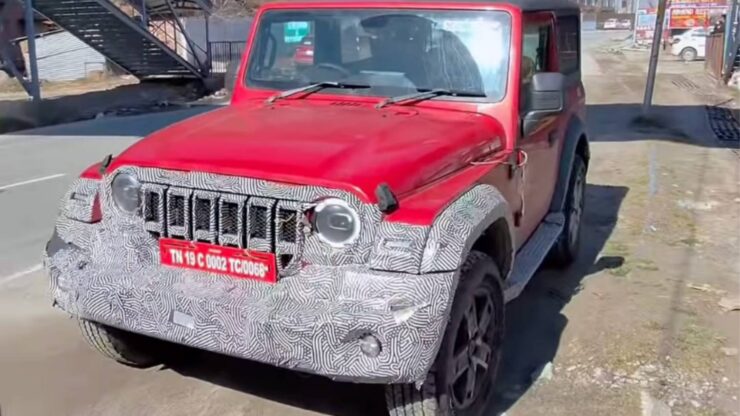
The three-door Thar facelift is scheduled to launch on September 22. Mahindra has already released teasers showing changes to the front-end design, while the updated model is expected to receive some interior and equipment upgrades as well. The familiar three-door body-on-frame platform and off-road-focused character will continue.
Also Read: Mahindra SUV Sales August 2026; Scorpio, Thar, Bolero, XUV 7XO, XEV 9S
Honda will introduce the first facelift for the Elevate in early October. The update is expected to bring revised lighting, bumpers and alloy wheels, along with changes inside the cabin. Honda has also indicated that features such as ventilated front seats and a 360-degree camera could be offered directly from the factory. The existing 1.5-litre naturally aspirated petrol engine, manual and CVT options are expected to continue.
The Slavia facelift has already been unveiled, with deliveries scheduled around the festive season. The sedan gets refreshed lighting and alloy wheels along with a new 360-degree camera, rear-seat massage function and updated digital displays. The 1.0-litre TSI now gets a segment-first eight-speed torque-converter automatic, while the 1.5-litre TSI continues with the seven-speed DSG.
Renault is expected to introduce a turbo-petrol version of the Triber by the end of September. The MPV will use the Kiger’s 1.0-litre three-cylinder turbo-petrol engine, expected to produce around 100hp. A factory-fitted CNG version using dual-cylinder technology is also expected. The additional power should address one of the Triber’s longstanding limitations, particularly when carrying a full load of passengers.