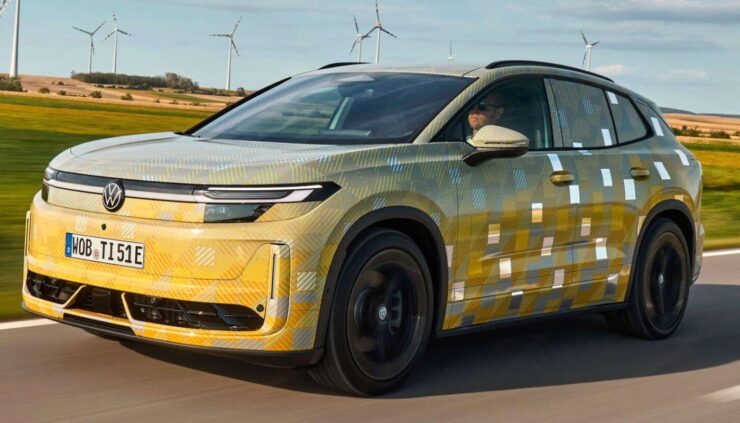
Volkswagen will introduce the new ID. Tiguan in early October ahead of its global market arrival at the beginning of 2027. The electric SUV will replace the ID.4 and ID.5 which have recorded more than 9.5 lakh deliveries since 2021. Volkswagen has chosen the Tiguan name for their successor instead of introducing another standalone electric badge – linking the new model directly with one of its highest volume SUV portfolios.
The decision carries considerable weight because more than 8.3 million Tiguan units have been produced internationally. The model currently ranks as the best-selling vehicle for both the Volkswagen brand and Volkswagen Group. The Tiguan and Tayron deliveries crossed one million units last year which gives Volkswagen a large existing customer base for the name before the electric version reaches showrooms.
The ID. Tiguan will not replace the regular Tiguan itself. Volkswagen will sell both side by side with the existing SUV available with petrol, diesel and plug-in hybrid powertrains. The electric model takes over the position currently occupied by the ID.4 and ID.5 and gives consumers another powertrain route under the same established name.
Volkswagen has also changed the exterior extensively for the new electric SUV. The company says the ID. Tiguan has the visual presence of a vehicle from the segment above despite its connection with the existing Tiguan family. Camouflaged prototypes are undergoing final development work ahead of the October premiere and the production-spec design will make its first public appearance at that event.
The new naming approach follows the ID. Polo and ID. Cross. Volkswagen wants its electric range to rely more heavily on familiar product names instead of keeping separate nomenclature for battery powered models. The ID. Tiguan becomes the third prominent example of that approach and moves an established global SUV badge directly into Volkswagen’s next electric generation.
Volkswagen also says the ID. Tiguan will target generous cabin space, intuitive controls, new technology and a more premium design treatment. The company sees the model as an electric counterpart to the attributes already associated with the Tiguan family but the ID. Tiguan will use a distinct design and replace two existing EVs as opposed to serving as a BEV derivative of the regular SUV.