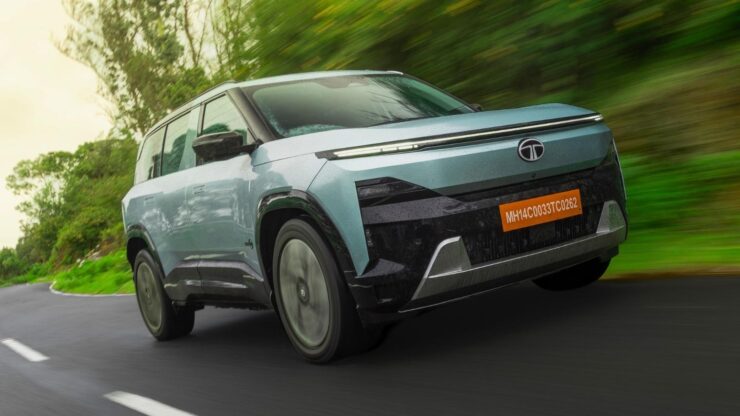
Tata Motors has expanded its Battery-as-a-Service (BaaS) model across its entire passenger electric vehicle lineup. Initially introduced as a targeted purchase option for entry-level models like the Tiago EV and Punch EV, the automaker has now extended the scheme to its premium offerings. As of today, prospective buyers can opt for the BaaS structure when purchasing the Nexon EV, Curvv EV, Sierra EV and the flagship Harrier EV.
The BaaS model physically separates the vehicle’s chassis from its battery pack at the point of purchase. Instead of paying the full, traditional sticker price upfront, customers finance the car and the battery independently. The mechanism significantly reduces the initial ex-showroom cost by transferring the massive expense of the vehicle’s most costly component into a recurring and subscription-based monthly payment.
Despite the “service” nomenclature utilized in marketing, this setup functions primarily as a dual-loan financial product. Buyers take on two separate loan accounts with highly variable tenures. The monthly battery installment fluctuates based on the pack’s kilowatt hour capacity, the customer’s initial down payment and the agreed overall loan duration.
| EV Model | Battery Capacity (kWh) | Standard Starting Price | BaaS Vehicle Price (+ Usage Cost) |
|---|---|---|---|
| Tiago.ev | 19 | ₹ 6.99 lakh | ₹ 4.69 lakh (₹ 2.6 / km) |
| Punch.ev | 30 | ₹ 9.79 lakh | ₹ 6.59 lakh (₹ 2.6 / km) |
| Nexon.ev | 45 | ₹ 14.34 lakh | ₹ 8.99 lakh (₹ 4.4 / km) |
| Curvv.ev | 55 | ₹ 17.19 lakh | ₹ 10.99 lakh (₹ 5.0 / km) |
| Sierra.ev | 63 | ₹ 18.79 lakh | ₹ 11.99 lakh (₹ 5.5 / km) |
| Harrier.ev | 65 | ₹ 21.79 lakh | ₹ 14.49 lakh (₹ 5.9 / km) |
Notably, this recurring monthly fee strictly covers battery access and entirely excludes charging, maintenance or repair costs. Addressing the nationwide rollout, Tata.ev’s Chief Commercial Officer, Vivek Srivatsa, said, “Extending BaaS* across our portfolio gives them precisely that choice. Customers can continue to buy their EV outright, including the battery, or opt for BaaS* and lower their upfront acquisition cost. Ultimately, our endeavour is simple: give customers the freedom to choose the solution that works best for them and make the transition to electric easier.”
As alternative ownership structures become progressively more prevalent in the domestic automotive market, Tata is utilising BaaS to ensure its portfolio remains competitive. The structure allows consumers to transparently compare the initial acquisition costs against rival electric vehicles offering similar financial incentives.
To seamlessly facilitate this dual-loan structure, Tata has partnered with multiple established lending institutions to ensure that the financing logistics are handled simultaneously at the dealership level. The actual financial viability of this model largely depends on individual usage patterns. Because the savings are eventually offset by a recurring per-kilometer cost, the BaaS model generally favours drivers with lower daily commutes.
High mileage drivers must calculate their break-even point carefully as the cumulative monthly battery payments will eventually surpass the initial capital saved at the time of purchase. Ultimately, the BaaS expansion is a strategic financing mechanism and naturally, the outright purchase option remains available for those who prefer traditional ownership without ongoing battery usage fees.