Representational
Suzuki Motor Corporation has placed India at the centre of its technology and manufacturing roadmap over the next decade with hybrid systems and compressed biogas set to receive major attention. The company also targets annual vehicle production capacity of around 4 million units in India from FY2030 onward. Maruti Suzuki already contributes more than 40 per cent of Suzuki Motor Corporation’s global revenue and accounts for roughly 60 per cent of its worldwide vehicle output.
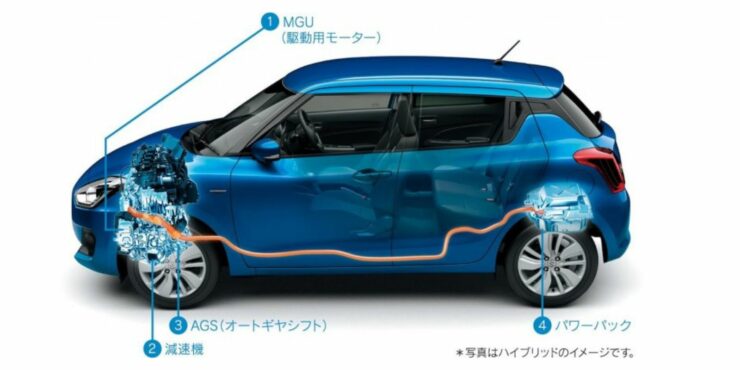
Hybrid development will take several routes over the coming years. Suzuki is working on a new Super Ene Charge system, high efficiency Series Hybrids and direct injection turbocharged engines. BEVs, internal combustion engines and alternative fuels will also stay in the product range as the company devises powertrain choices to individual markets.
Compressed biogas will receive particular attention because of Maruti Suzuki’s large CNG vehicle base. Suzuki’s third biogas facility in India began operations in August 2026 and converts cow dung into fuel grade biogas. The process also produces organic fertiliser that goes back to farms. Suzuki sees this local fuel cycle as one route to reduce dependence on conventional natural gas and fossil fuels.
Also Read: Maruti Suzuki Baleno, Dzire & Swift CNG AMT Full Price List Out In India
Manufacturing expansion will support these technology programmes. Maruti Suzuki’s Kharkhoda operations are expected to reach annual capacity of 1 million units by FY2030 and Suzuki wants India to supply more vehicles to overseas markets. The company also targets a 50 per cent reduction in new model development lead time by 2030 – a 30 per cent gain in development efficiency and a 50 per cent gain in manufacturing efficiency through digital development, modularisation and concurrent engineering.
Also Read: Maruti Suzuki Targets Nearly 10 Lakh Green Vehicle Sales This FY
Suzuki is also working on lighter vehicle structures and lower cost software architecture. Its S-Light programme focuses on reducing vehicle mass without compromising crash protection with lower weight expected to benefit fuel economy and EV driving range. SDV Lite targets price sensitive markets such as India through a less expensive software defined vehicle architecture. Knowledge gained from Suzuki’s e SKY electric system will also feed into future products.