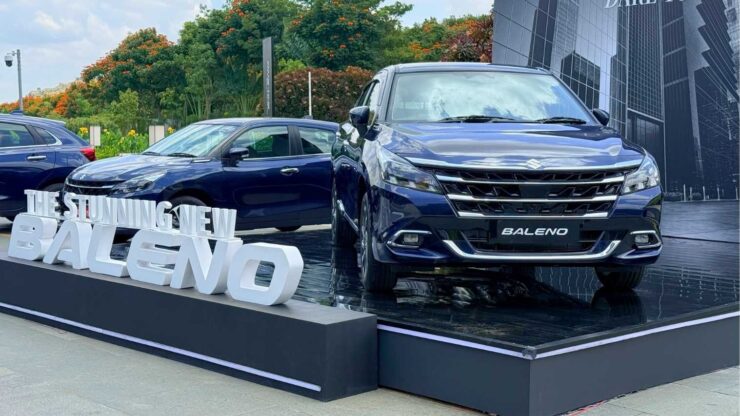
New Maruti Baleno
The festive season has pushed the country’s largest carmakers to raise vehicle availability ahead of Navratri, Dussehra, Dhanteras and Diwali. The three companies enter the period from very different positions: Mahindra now has SUV and EV capacity of 68,000 units per month, Hyundai dealers hold four to five weeks of inventory and Maruti Suzuki carries a pending order bank of 2.2 lakh units.
The Mahindra production capacity reached 68,000 SUVs and EVs per month after additions during the first half of FY27. The higher output has reduced waiting periods across several models and improved vehicle availability at dealerships. The booking pipeline has stayed healthy despite the extra capacity which gives Mahindra more vehicles to convert existing orders into festive deliveries.
The Hyundai dealer network has built inventory equal to four to five weeks of sales ahead of the festive rush. The company raised stock over recent months and also improved logistics across its distribution network. The extra inventory gives dealerships more vehicles for immediate delivery during a period when customers often want to complete purchases around specific festival dates.
The Maruti Suzuki order bank stands at 2.2 lakh units before the peak festive period. The pending bookings equal around 16 days of stock compared with 12 days at the beginning of FY27. The company is adjusting model-wise production and supply allocations so individual vehicles do not develop sharply longer waiting periods as festive deliveries increase.
The Maruti production network has also gained two new manufacturing lines which add 5 lakh units of annual capacity. The company will raise output from the new lines in stages and expects them to reach full stability by the end of 2026. The added capacity gives Maruti more room to address its booking backlog and raise deliveries through the final months of the year.
The three manufacturers have taken different routes to the same festive sales period. The Mahindra approach relies on higher factory capacity, Hyundai has placed more vehicles directly into its dealer network and Maruti Suzuki has expanded production as it works through a much larger pending order book. The supply positions also show why vehicle availability can differ substantially between brands even during the same seasonal sales window.
The Maruti expansion provides the largest stated capacity addition among the three companies as the two new lines add 5 lakh units per year once fully stabilised. The company could also introduce special schemes for customers affected by supply constraints on pending bookings. The year-end ramp-up of those lines will determine how quickly Maruti can reduce the 2.2 lakh-unit backlog after the festive period.