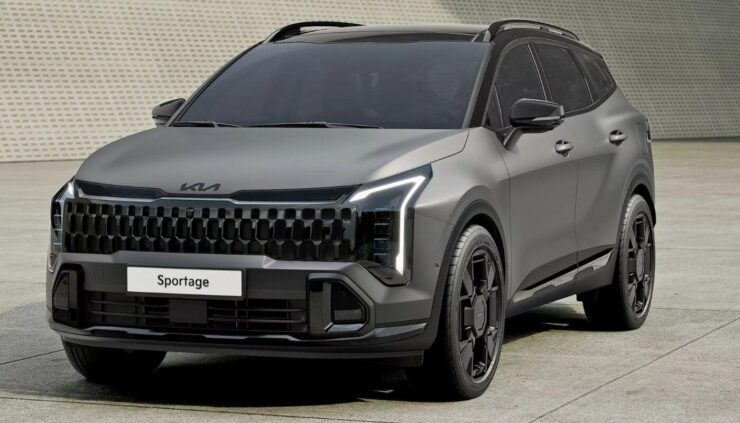
Representational
At its 2026 CEO Investor Day in April, Kia announced it will expand its line-up in India to 10 models. This expansion will include both imported and locally manufactured products. Until recently, Kia had seven models in its Indian line-up: Sonet, Syros, Carens, Seltos, Carnival, EV6, and EV9. The Sorento, launched on 4 September expanded the portfolio to eight models.
A new report from Autocar India suggests that the last two remaining models in the planned 10-model line-up will likely be new B- and C-segment products. The B-segment model is likely to be a corporate cousin of the second-generation Hyundai Bayon, rumoured to be introduced in India by the end of next month.
The new B-segment SUV should thus measure around 4.2 metres in length and fill the whitespace between the Sonet and Seltos. It could be one of the first Kia models in India offered with a factory-fitted CNG kit option. Given the Hyundai Bayon connection, it’s safe to assume it will be offered with a 1.5-litre naturally aspirated four-cylinder engine in petrol, CNG, and hybrid variants. Kia could launch this model as its Maruti Victoris rival sometime in 2028.
Also Read: Kia Expands Assured Buyback Programme With Up To 75% Residual Value
The second locally manufactured model will likely be a C-segment model positioned between the Seltos and Sorento. It could also be an SUV, possibly one based on the same platform as Hyundai’s upcoming MPV or off-road SUV, both of which were confirmed in October 2025. Kia could offer this model with multiple powertrain options.
While the identities of the B- and C-segment models have yet to be confirmed, the former has received the green signal for launch while the latter is still under evaluation. Kia could launch these models sometime between 2028 and 2029.
Also Read: Kia Oct 2026 Discounts Of Up To Rs. 1.70 Lakh; Seltos, Sonet, Carnival, Carens
The company is targeting annual sales of 4.1 lakh cars and a market share of 7.6% by 2030, and these future locally produced models could be key to achieving these targets. The South Korean automaker is also considering establishing another assembly line at the Anantapur plant to build capacity for these products.