Demand for electric cars in India has been consistently growing in recent years. 2026 will mark a new annual record, with the volume already having surpassed the previous all-time high of 1.96 lakh units that was recorded in 2025. 3.05 lakh units have already been sold this year, and by the end of December, the volume could reach around 3.25 lakh units.
For most months between January and October 2026, electric car sales in India have been over 25,000 units. In the latter half of that period, the volume was consistently above 30,000 units. By 9 November 2026, 3,04,701 electric cars had been registered in India, as per data from the Vahan portal. Compared to 1,95,571 electric cars registered in the entire previous calendar year, this YTD volume was up 56%.
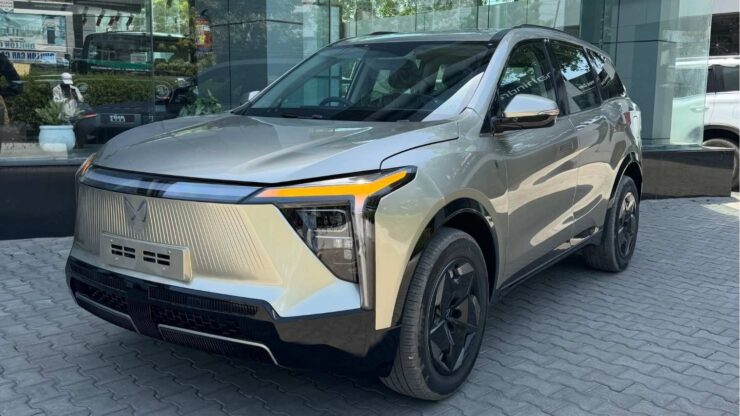
Tata Motors, which offers India’s widest range of electric cars, comprising seven models, continues to lead the market. The company sold 1,20,895 electric cars between January and 9 November this year, with a market share of 39.67%. JSW MG Motor lost its second position from last year to Mahindra, which sold 69,660 electric cars during this period. The homegrown brand had a market share of 22.86%.
Also Read: 5 Upcoming Tata EVs, First Avinya EV Coming By 2028
| Month | 2026 Electric Car Sales | 2025 Electric Car Sales | Difference |
| January | 21,568 | 13,325 | 62% |
| February | 16,300 | 10,481 | 56% |
| March | 25,502 | 14,390 | 77% |
| April | 25,984 | 14,794 | 76% |
| May | 28,416 | 14,695 | 93% |
| June | 33,640 | 15,274 | 120% |
| July | 34,717 | 17,934 | 94% |
| August | 32,587 | 20,182 | 61% |
| September | 38,440 | 18,520 | 108% |
| October | 37,516 | 20,954 | 79% |
| November | 10,031 (Until 9 November) | 17,435 | – |
| December | – | 17,587 | – |
| Total | 3,04,701 | 1,95,571 | 56% |
JSW MG Motor slid to the third spot, with 59,988 electric cars delivered between January and 9 November this year, and this volume represented a market share of 18.70%. VinFast ranked sixth on the sales chart, with 15,867 electric cars delivered and a market share of 5.20%. Maruti Suzuki was in fifth position, with 12,390 registrations and a market share of 4.06%.
Kia sold 7,612 electric cars between January and 9 November this year, which gave it a market share of 2.49%. BYD, with 6,755 units registered, held a market share of 2.21%. Hyundai’s EV registrations stood at 6,013 units, translating to a market share of 1.97%.
Also Read: Kia India Confirms New ICE & Electric Cars With 2nd Manufacturing Plant
Hyundai sold 6,013 electric cars during this period, holding a market share of 1.97%. Toyota’s electric car sales were lower than even some luxury brands, standing at 762 and giving the company a market share of less than 1%. The same goes for Citroen, which delivered 436 electric cars.
Moving to luxury brands, BMW delivered 4,273 electric cars between January and 9 November this year, while Mercedes-Benz, which leads India’s luxury car market if including all powertrain types, sold just 1,416 electric cars. Tesla, Volvo Cars, and Porsche sold 1,153, 383, and 83 electric cars, respectively. Rolls-Royce, Lotus Cars, and Audi registered 6, 3, and 2 electric cars.
Interestingly, JLR has registered 4 units of EVs between January and 9 November this year, but they are unlikely to be retail sales, as the company has not launched any EV since it discontinued the Jaguar I-Pace two years ago. The four units could be of the Range Rover Electric, which it plans to launch in 2027.