Demand for premium and luxury cars in India has been growing steadily this decade and shows no signs of slowing. With this momentum expected to continue, automakers are planning to introduce three new brands in these segments by the end of 2027.
Denza, BYD’s premium brand, has confirmed plans to foray into India this year. Denza is widely known for its MG M9-rivalling D9 MPV and Z9 shooting brake, both available in plug-in hybrid and pure electric variants. However, it also markets N8/N8L and N9 large SUVs, with the former available with a choice of plug-in hybrid and electric powertrains and the latter being an electric-only model. Recently, it also introduced an all-electric sports car called Z in its home market.
Outside China, Denza also sells rebadged versions of rugged off-road-focused electrified SUVs from BYD’s Fang Cheng Bao brand. This line-up includes a pure electric B3 and two plug-in hybrids: B5 and B8. In India, Denza is expected to launch the D9 and Z9 models initially, but there’s no word on whether the company plans to offer them as plug-in hybrid or pure electric models.
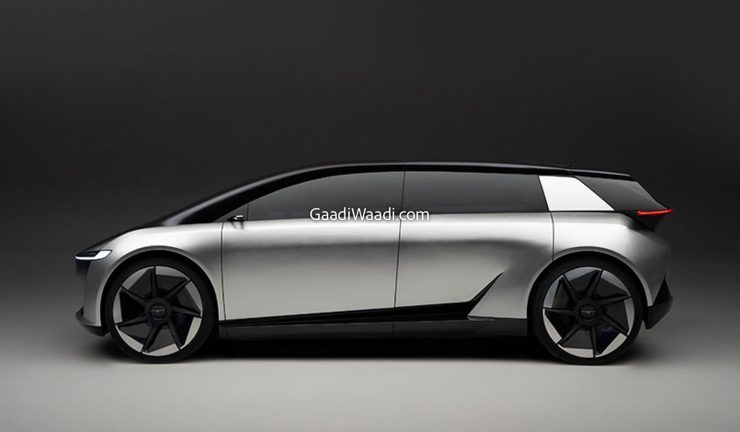
Homegrown automaker Tata Motors had already announced a new ‘Avinya’ brand that would solely market premium electric cars. The first Avinya EV is likely to be introduced sometime in the second half of 2027. The second model may follow a year or two later, as part of TMPV’s plans to expand its EV line-up across the Tata.ev and Avinya brands to ten models by March 2031.
While Avinya EVs were initially planned to be developed on a lower-end version of JLR’s EMA platform, that plan has been shelved. Under the new plan, Avinya EVs will be based on the multi-energy platform of the Freelander brand owned by Chery Jaguar Land Rover (CJLR), a joint venture between Chinese automaker Chery and JLR. The first Avinya EV should be a C- or D-segment electric SUV priced somewhere in the Rs. 30-35 lakh (ex-showroom) range.
South Korean automaker Hyundai’s luxury brand Genesis is likely to enter India in the second half of 2027. Established in 2015, it offers nine models globally: G70, G70 Shooting Brake, G80, G90, GV60, GV70, GV80, GV80 Coupe, and GV90. Most of these cars are ICE models, although Genesis is gradually moving towards electrification. The GV60 is a bespoke EV, the G80 is available as an EV as an option, and the GV90 will be available initially as an EV and later also as an extended-range electric vehicle (EREV).
The GV80, an SUV challenging BMW’s X5, and the GV80 Coupe, its SUV-coupe version, could be the first models to be launched in India. Genesis will import its cars in knocked-down kits and assemble them locally to price its cars competitively.